
Business Advisory & Marketing Services for Entrepreneurs and Business Owners
AI-ENHANCED DIAGNOSTIC
Client Growth Audit
AI-powered diagnostic with expert strategic analysis designed to help identify potential friction points, growth opportunities, and strategic recommendations for your business. Our process combines 47 data points with experienced business analysis.
One-time fee
$3,500
72-hour expert delivery
AI data analysis with strategic interpretation
Expert competitor intelligence
Custom 90-day strategic roadmap recommendations
Business growth projections based on your metrics
Every engagement begins with clarity.
The Client Growth Audit is how that clarity is created.
AI-ENHANCED CONTENT
Content Revenue System
Never pay for a marketing agency again. Our AI-enhanced Content Revenue System creates strategic marketing plans tailored to your brand and business, and is strategically optimized with expert curation.
Starting at
$60,000
4-month strategic system
AI-backed marketing plans with strategic refinement
Expertly curated content calendars and campaigns
Performance optimization and iteration
Multi-platform strategic adaptation
Pricing is tailored based on scope and company size. Engagements start at $60,000, paid in advance.
EXECUTIVE STRATEGIC ADVISORY
1 on 1 Private Advisory
Private, principal-level advisory for founders navigating scale, simplification, or exit.
This is not coaching or execution.
This is strategic oversight.
I work directly with the founder to pressure-test decisions, identify blind spots, and design the moves that materially impact growth, leverage, and risk.
Investment:
$225,000
per year
Direct advisory relationship with the founder
Strategic decision support and guidance
Marketing and business strategy alignment
AI-supported analysis used internally to inform judgment
Human oversight in all strategic recommendations
Engagement Structure:
Annual engagement
Limited availability
Paid in advance
Important Note:
This engagement is designed for founders where decisions carry meaningful consequences.
Availability is limited and offered by fit, not volume.
Organic Content Marketing Services

For Personal Brands & Companies
For Post-Acquisition & Startups

For Video Podcasts
Paid Advertising Services
Meta Ads
Online Courses
GET THE UNFAIR ADVANTAGE

High Status Branding (Enrollment closed)

High-Ticket Sales Training Program

High Status Networking (Enrollment closed)
Strategic Playbooks for Brand Builders
Frameworks built for founders who execute.
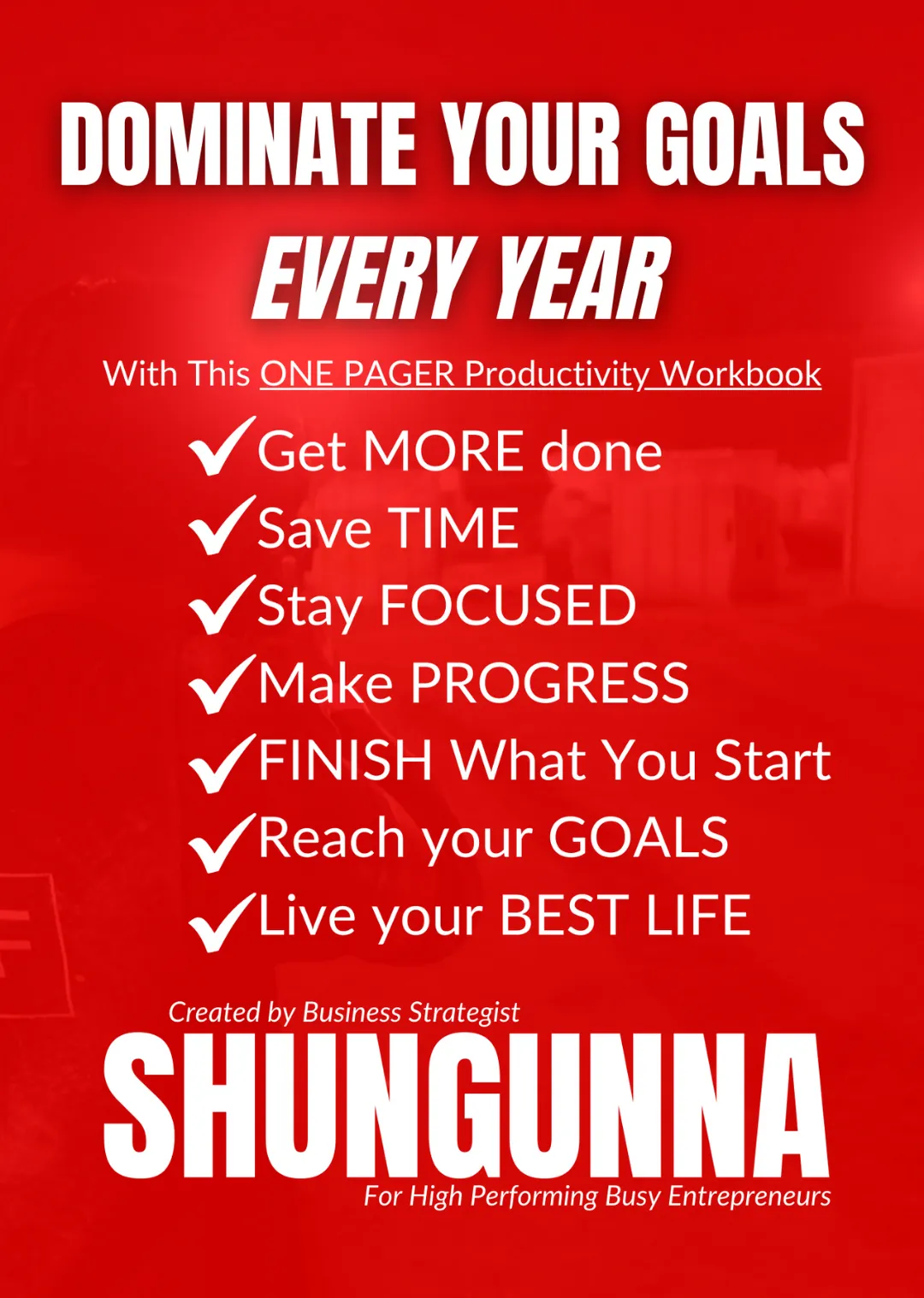
Productivity Workbook (E-book)

(Enrollment Closed)
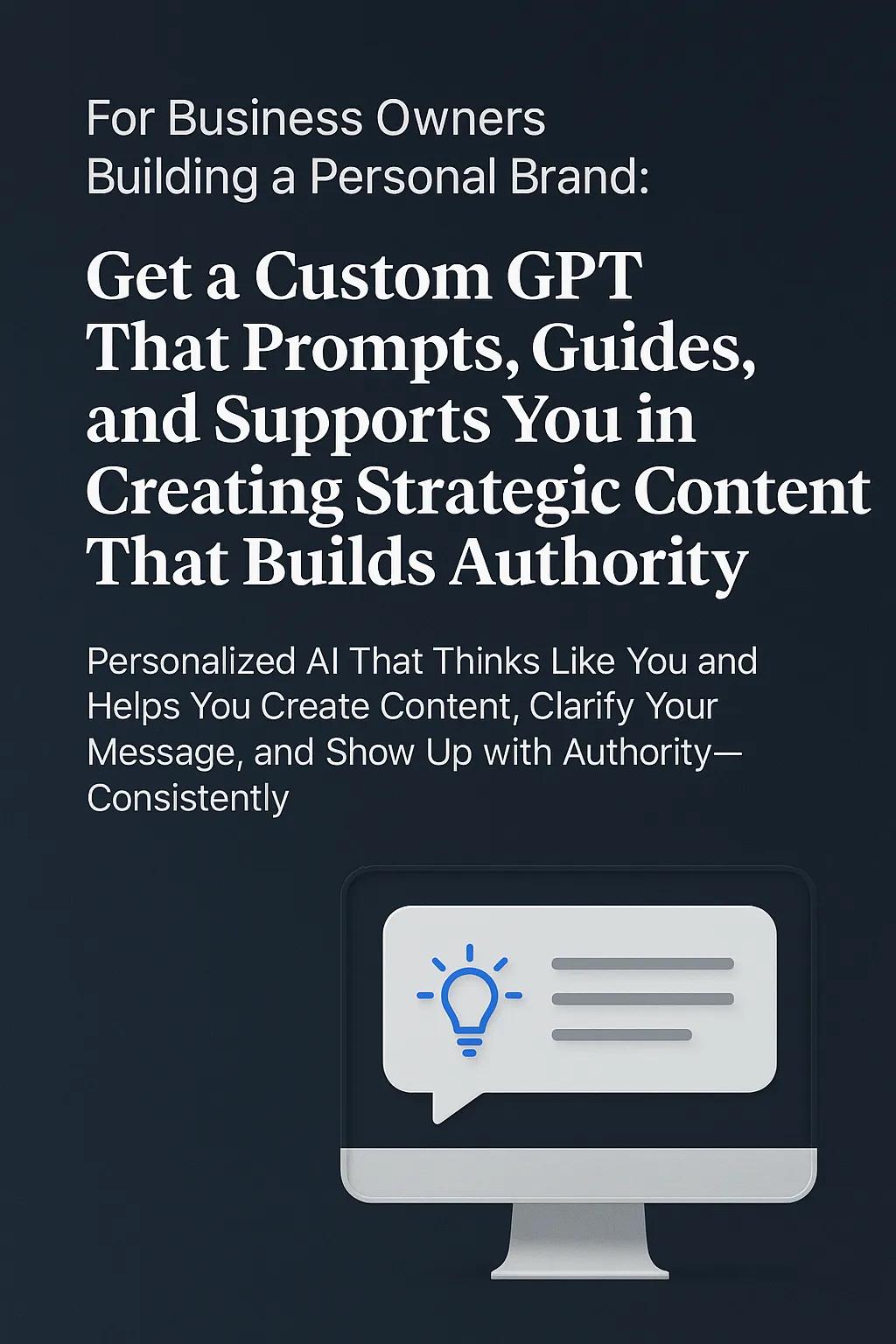
Custom Personal Branding GPT
BUSINESS BLOG ARTICLES
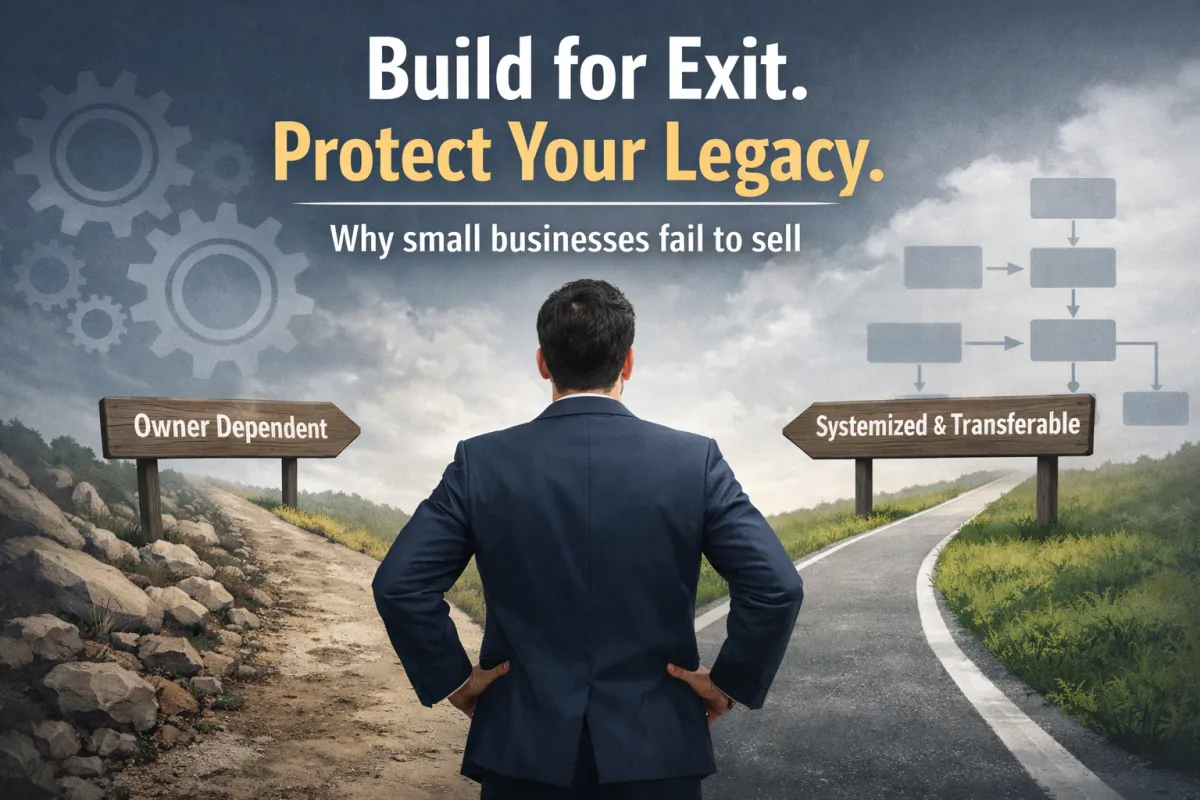
Why Small Business Owners Must Build With an Exit in Mind Even If They Plan to Keep It Forever
Why Small Business Owners Must Build With an Exit in Mind Even If They Plan to Keep It Forever
Most small business owners never think about selling their business. They plan to keep it. They want to pass it down. They see it as legacy.
But building for legacy and building for exit are not opposites. In practice, they require the same discipline.
When a business is not built with an exit option in mind, it often becomes trapped with the owner as the operator. When that happens, growth slows, risk rises, and long-term value disappears, even if the owner never intended to sell.
This article explains why building for exit protects legacy, not threatens it, and what that looks like in the real world.
Proof From Real-World Experience
In small businesses across many industries, a pattern repeats.
The owner becomes the center of everything. Every decision routes through them. Every key relationship depends on them. Every system lives in their head.
At first, this feels normal. Then growth slows. The business can only expand to the extent the owner can operate.
When unexpected events happen such as health issues, family needs, or burnout, the owner cannot step away. There is no bench. There is no system that runs without them. Revenue depends on daily involvement.
When an exit opportunity appears, most cannot take it. Buyers look for transferable value. What they see instead is key person risk. The business only works if the owner works.
In one real case, systems were built to allow operations to run without constant oversight. The operating partner chose not to follow them. Growth stalled. Margins thinned. Revenue stayed limited. An exit opportunity appeared later and was taken because the risk of relying on one operator was too high. The business had limited value beyond that operator’s capacity.
The lesson was clear. Businesses that depend on one person rarely scale past that person and rarely sell for meaningful value.
What This Means
Building for exit does not mean planning to sell tomorrow.
It means building a company that:
Can operate without you
Has documented systems
Has predictable revenue
Has transferable relationships
Has financial clarity
If the business collapses when you leave for two weeks, it is not a company. It is a job with overhead.
A buyer does not purchase effort. A buyer purchases systems, cash flow, and transferability.
When a business is built for exit, it is structured so another capable operator can step in and run it.
That same structure makes it easier for the current owner to enjoy it long term.
Why This Matters for Business Owners
Most owners believe legacy means control.
In practice, legacy means durability.
A business that only works because of one person has no durability. It cannot survive emergencies. It cannot attract high-level operators. It cannot command premium valuation.
Here is what happens when exit thinking is ignored.
1. The Owner Becomes the Bottleneck
All approvals, decisions, and relationships flow through one person.
Growth becomes limited by energy and time.
2. Emergencies Create Instability
If the owner cannot show up, revenue drops.
Customers feel it. Staff feel it. Stress rises.
3. Buyers See Risk Instead of Opportunity
Sophisticated buyers evaluate key person risk. If revenue depends on one individual, value drops sharply.
Many small businesses never sell for this reason alone.
4. Cash Flow Stays Lower Than It Could Be
When operations are not systemized, errors increase. Margins compress. Decisions become reactive instead of structured.
The business grows only to the level of the operator’s habits.
Building for exit removes these constraints.
Step by Step Breakdown: How to Build With Exit in Mind
This is not about complex financial engineering. It is about structure.
Step 1: Separate Ownership From Operations
Ownership and daily execution are different roles.
When the same person holds both without structure, confusion follows.
Document:
What only the owner can do
What can be delegated
What already repeats
The goal is clarity. Clarity exposes bottlenecks.
Step 2: Turn Repeated Actions Into Documented Systems
If something happens more than twice, it qualifies as a system.
Document:
Sales process
Client onboarding
Service delivery
Billing
Hiring
Training
Systems reduce reliance on memory. They increase consistency. They create transferability.
Step 3: Reduce Key Person Risk
Key person risk means the business collapses if one person leaves.
To reduce it:
Train at least two backups for critical roles
Centralize information
Remove client relationships that depend on personality alone
When revenue depends on relationships tied to one individual, value stays low.
Step 4: Make Financials Clean and Predictable
Buyers evaluate clarity.
That means:
Clean bookkeeping
Clear profit margins
Predictable revenue streams
Limited owner adjustments
If financials require explanation, value drops.
A business built for exit runs on clean numbers.
Step 5: Build Transferable Customer Acquisition
If customers come only because of the owner’s personal brand, value narrows.
Transferable acquisition systems include:
Paid advertising campaigns
Search traffic
Referral systems
Sales teams
Documented outbound processes
The more predictable the lead flow, the more attractive the business.
Step 6: Develop Leadership Below You
A company grows when leadership expands.
If every problem escalates to the top, growth caps.
When managers handle decisions confidently, owner dependency declines.
Step 7: Periodically Test Owner Absence
One quiet test reveals everything.
Can the business operate for 30 days without daily owner involvement?
The result shows whether systems exist or whether the owner is still the engine.
Strategic Insight: Legacy and Exit Share the Same Architecture
Many founders believe building for exit signals disloyalty to their legacy.
In reality, legacy without exit structure creates fragility.
Here is the principle:
A business that can be sold is strong enough to be kept.
A business that cannot be sold is usually too fragile to last.
Exit readiness forces discipline:
Systems
Delegation
Financial clarity
Leadership depth
Transferable value
These are the same traits required for generational durability.
Building for exit is not planning to leave.
It is planning for strength.
Common Mistakes to Avoid
1. Confusing Busyness With Value
Working nonstop does not increase business valuation. Transferable systems do.
2. Delaying Systems Until Later
Later rarely arrives. Chaos compounds quietly.
3. Letting One Operator Control All Execution
When operations depend on one person’s habits, growth stops at their limits.
4. Ignoring Margins Because Revenue Is Growing
Revenue without disciplined operations shrinks value.
5. Believing Legacy Means Permanent Control
Control without structure creates risk, not stability.
Frequently Asked Questions
What does building for exit actually mean?
It means structuring a business so it can operate without daily dependence on the owner.
If I never plan to sell, does this still matter?
Yes. Exit ready businesses are more resilient during emergencies, transitions, and leadership changes.
Why do most small businesses never sell?
Many depend heavily on the owner. Buyers avoid businesses where revenue disappears if one person leaves.
Is building systems expensive?
In most cases, it requires time and clarity more than capital. Documentation and delegation create leverage.
How do I know if I am the bottleneck?
If decisions stall when you are unavailable or if revenue drops when you step away, dependency likely exists.
Does personal branding hurt valuation?
It can if revenue depends entirely on one personality. Brand equity must be transferable.
The Quiet Reality
Most founders begin with independence in mind.
Over time, without structure, independence turns into obligation.
The business depends on them. The team depends on them. Revenue depends on them.
Exit thinking reverses that drift.
It builds optionality.
Optionality increases value.
Value increases leverage.
Leverage increases durability.
Durability is what legacy actually requires.
📩 Need Help With Your Specific Situation?
If you want Resurreccion Media to look at your business and give you clarity on your next step, reach out to us.
We help founders, service businesses, companies, and creators build content marketing systems that scale.
📊 Take the Free Growth Scorecard
Get an instant score that shows your bottlenecks and next moves.
You will get a free business audit the moment you finish.
It takes less than 5 minutes.
Click here to get your Scorecard.
▶️ Subscribe to Our YouTube Channel
We post simple, clear videos that help business owners grow without confusion.
You can find us at @resurreccionmedia.

Resurreccion Media is a private Consulting Firm helping Entrepreneurs and Business Owners simplify and scale through strategic marketing systems and business advisory.
“If you’re serious about scaling, simplify first.
Then execute ruthlessly.”
RESURRECCION MEDIA
Partnering with Resurreccion Media means your business will be built to last.
By using our site, you agree to the resurreccionmedia.com Terms & Conditions, Disclaimer, and Privacy Policy.
Policies: Accessibility Statement.
© All Rights Reserved 2026