
Business Advisory & Marketing Services for Entrepreneurs and Business Owners
AI-ENHANCED DIAGNOSTIC
Client Growth Audit
AI-powered diagnostic with expert strategic analysis designed to help identify potential friction points, growth opportunities, and strategic recommendations for your business. Our process combines 47 data points with experienced business analysis.
One-time fee
$3,500
72-hour expert delivery
AI data analysis with strategic interpretation
Expert competitor intelligence
Custom 90-day strategic roadmap recommendations
Business growth projections based on your metrics
Every engagement begins with clarity.
The Client Growth Audit is how that clarity is created.
AI-ENHANCED CONTENT
Content Revenue System
Never pay for a marketing agency again. Our AI-enhanced Content Revenue System creates strategic marketing plans tailored to your brand and business, and is strategically optimized with expert curation.
Starting at
$60,000
4-month strategic system
AI-backed marketing plans with strategic refinement
Expertly curated content calendars and campaigns
Performance optimization and iteration
Multi-platform strategic adaptation
Pricing is tailored based on scope and company size. Engagements start at $60,000, paid in advance.
EXECUTIVE STRATEGIC ADVISORY
1 on 1 Private Advisory
Private, principal-level advisory for founders navigating scale, simplification, or exit.
This is not coaching or execution.
This is strategic oversight.
I work directly with the founder to pressure-test decisions, identify blind spots, and design the moves that materially impact growth, leverage, and risk.
Investment:
$225,000
per year
Direct advisory relationship with the founder
Strategic decision support and guidance
Marketing and business strategy alignment
AI-supported analysis used internally to inform judgment
Human oversight in all strategic recommendations
Engagement Structure:
Annual engagement
Limited availability
Paid in advance
Important Note:
This engagement is designed for founders where decisions carry meaningful consequences.
Availability is limited and offered by fit, not volume.
Organic Content Marketing Services

For Personal Brands & Companies
For Post-Acquisition & Startups

For Video Podcasts
Paid Advertising Services
Meta Ads
Online Courses
GET THE UNFAIR ADVANTAGE
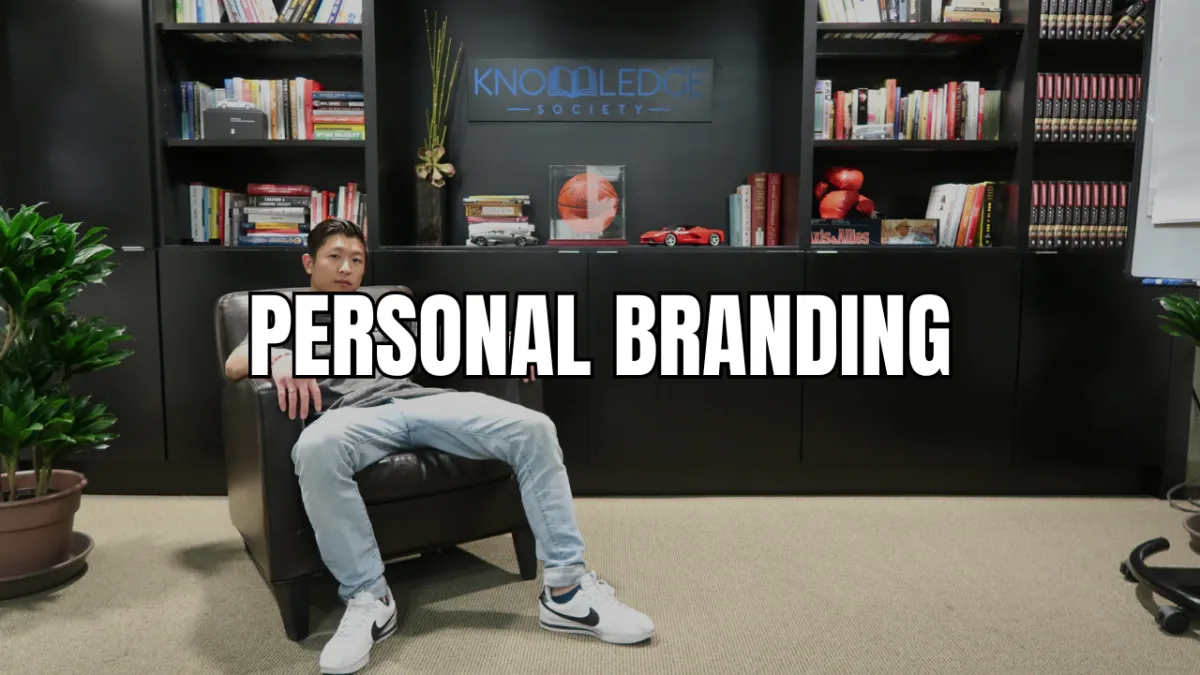
High Status Branding (Enrollment closed)

High-Ticket Sales Training Program

High Status Networking (Enrollment closed)
Strategic Playbooks for Brand Builders
Frameworks built for founders who execute.
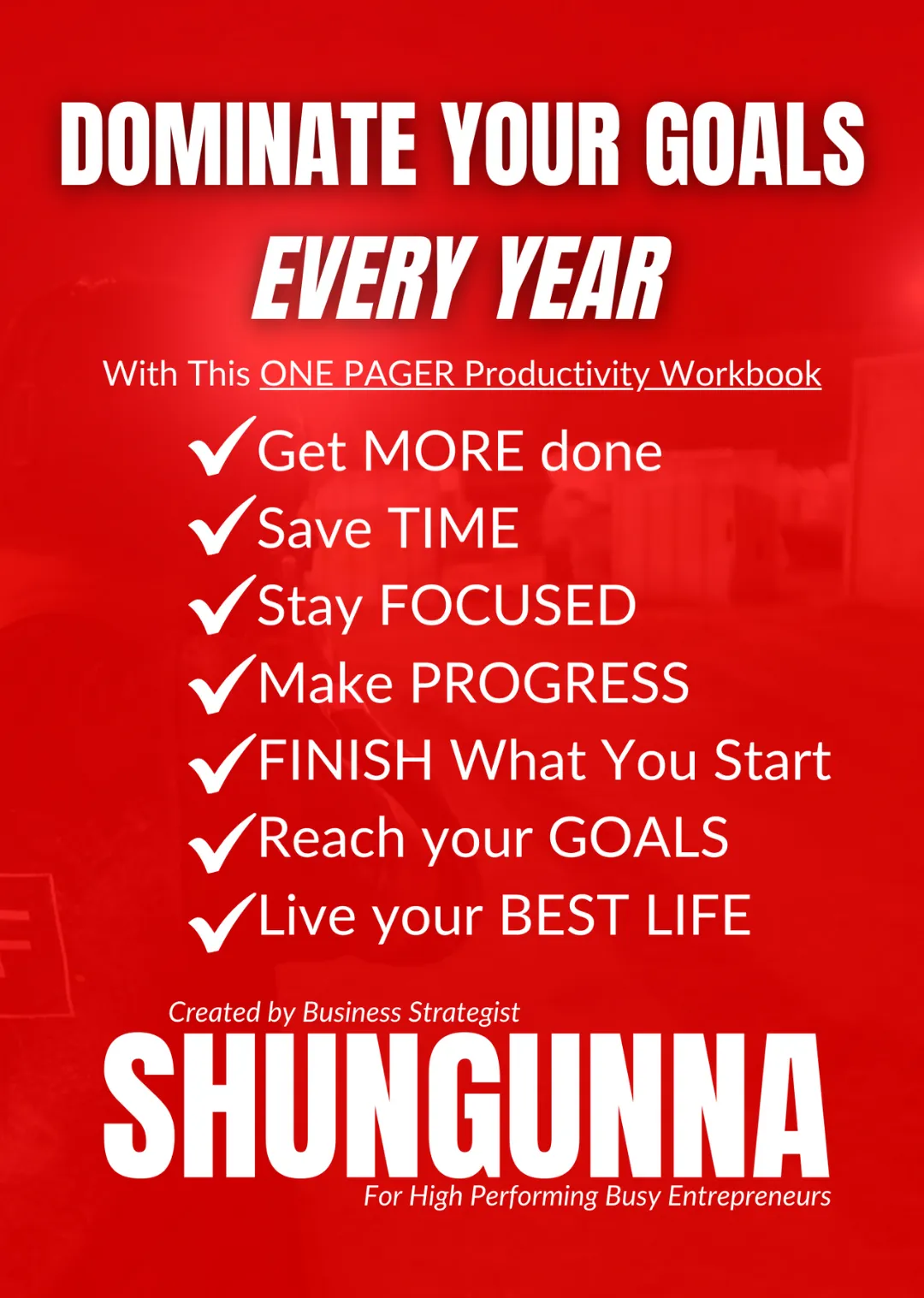
Productivity Workbook (E-book)

(Enrollment Closed)
Custom Personal Branding GPT
BUSINESS BLOG ARTICLES

The Visibility Gap: Why the Loudest Business Wins
Your best competitor may not be better. They may simply be louder. This article explains the visibility gap, why attention compounds for businesses that stay visible, and what the pattern looks like in the real world.
Proof From Real-World Experience
When a business starts publishing on a steady rhythm, a pattern shows up. Leads increase. Referrals increase. Word of mouth starts moving, and it moves faster than it did before. The business becomes memorable, and a memorable business is easier to buy from.
Visibility fills the top of the funnel. The owner or the team still has to turn that attention into customers. When both sides work, growth compounds instead of stalling.
The same pattern plays out at the largest scale. MrBeast, a creator with one of the largest audiences on YouTube, launched a chocolate brand, Feastables, in 2022. Within that first year it was stocked in Walmart stores across the United States, on shelves legacy chocolate brands had owned for decades, and it has since grown into a business reported in the hundreds of millions in yearly sales. His audience did the marketing before the product ever reached a shelf. Distribution beat incumbency. The visible player took ground from the quiet ones, and it can happen in any market.
Most owners never see it coming. They assume quality wins on its own. In most markets, the business customers see is the business customers choose.
Owners often discover the gap by accident. A customer mentions hiring the competitor because they saw them everywhere. The work was comparable. The difference was exposure. That moment tends to change how the owner thinks about marketing.
What This Means
The visibility gap is simple. It is the distance between how good a business is and how many people know it exists.
A customer cannot buy from a business they have never heard of. It does not matter how good the work is. If the business is invisible, the customer picks someone else.
Familiarity feels like trust. When a person sees a business again and again, that business feels safe to choose. This is not logic. It is how people work. The known name wins the first call.
Being the best-kept secret is not a strategy. It is a gap. Every month the gap stays open, a louder competitor collects the familiarity, the trust, and the first call that could have gone to the better business.
Think of two plumbers. Same skills, same prices. One posts videos answering common questions. The other does great work in silence. When a homeowner needs help at midnight, they call the one they have seen. The work was equal. The visibility was not.
Why This Matters for Business Owners
Attention compounds. Each piece of content stacks on the last one. One video is a drop. A hundred videos is a presence. The businesses that publish on rhythm build recognition the way savings build interest: slowly at first, then faster.
Referrals run on language. People refer businesses they can describe. When a business publishes, it hands its customers the words to describe it. "Have you seen their videos?" is easier to say than a ten-minute explanation of what the company does.
The first call goes to the familiar name. When a pipe bursts or a roof leaks, the buyer does not research for a week. They call the business they already know. Visibility puts a business in that position before the need even appears.
Conversion still decides the outcome. Visibility brings the call. The team still has to win the job. Businesses that pair steady visibility with strong follow-through see the full effect. Visibility without conversion leaks. Conversion without visibility starves.
Visibility also moves pricing. When a business is known, it stops competing on price alone. Customers pay more for the business they trust, and trust starts with recognition. The visible business quotes with confidence. The invisible one discounts to get the job. Over a year, that difference is worth more than any single campaign.
The gap has a cost measured in missed first calls. Most buyers contact one or two businesses. If yours is not among the names they already know, you never enter the race. The work was never judged. It was never seen.
Step-by-Step Breakdown
Closing the gap is a system, not a burst. The businesses that break through tend to follow the same sequence.
Step 1: Get clear on one buyer. Businesses that try to speak to everyone reach no one. The ones that break through pick a single buyer and speak directly to that buyer's problems. The buyer is usually the person with the most expensive problem the business solves well. Clarity comes before cameras.
Step 2: Mine real conversations. The best ideas already live inside the business. They come out in sales calls, on job walks, and in customer questions. Operators who capture those moments never run out of things to say. A phone note after each job is enough. Ten minutes of capture beats an hour of brainstorming.
Step 3: Assign one owner. Content dies when everyone owns it. The businesses that stay consistent put one person in charge of the strategy from idea to post. When the owner tries to carry it alone, publishing stops the first time the schedule gets heavy. That owner protects the rhythm when the week gets busy.
Step 4: Put a face on it. Familiarity needs a face. The owner, the expert, or a team member on camera turns a company into a person. Customers remember people. Logos do not get recognized at the grocery store. Perfection is not required. Consistency on camera beats one polished video.
Step 5: Publish on rhythm. Bursts fade. The compounding effect comes from a repeatable cycle: film, publish, repeat. Motivation runs out. Systems do not. One filming session a month can feed weeks of posts when the system is built right. The rhythm matters more than any single post.
Strategic Insight
The timeless principle is this: distribution beats obscurity. In every market, attention is limited, and the business that holds it holds the advantage.
This is why business feels like war. Two companies can do the same work at the same quality. The one the market sees gets the calls, the referrals, and the pricing power. The quiet one fights for scraps. Quality decides who keeps the customer. Visibility decides who gets the chance.
There is a second-order effect most owners miss. Visibility attracts more than customers. It attracts talent, partners, and better suppliers. People want to work with the business they have heard of. The visible business hires easier and partners faster, which widens the gap even further.
New threats also come from unexpected directions. A business can lead its local market for years, then lose ground to an outsider with an audience. The outsider does not need better operations on day one. Attention buys time to catch up. The gap is defensive as well as offensive: visibility protects what a business has already built.
Common Mistakes to Avoid
Waiting to be ready. Many owners polish while the gap widens. The competitor does not wait. Every quiet month hands familiarity to someone else.
Posting with no owner. A team can make content, but when no one owns the strategy from idea to post, publishing dies after two weeks. Enthusiasm is not a system.
Talking about the business instead of the buyer. Owners sit too close to their own work. They explain what they do instead of what the customer gets. Expertise has to be translated into buyer-relevant stories, or it does not land.
Treating content as a campaign. A burst of posts followed by silence builds nothing. Compounding needs continuity. Ten posts a month for a year beats a hundred posts in a week.
Judging too early. Revenue follows attention with a lag. Businesses that quit in month two never see what month twelve was building toward.
Copying competitors instead of leading. Watching a competitor's content and copying it keeps a business one step behind. The businesses that win say what the competitor will not say. Imitation rents attention. A clear point of view owns it.
FAQ
Does visibility really matter more than quality? Quality keeps the customer. Visibility gets the first call. A business needs both, but only one of them works before the customer ever makes contact.
What if no one on my team wants to be on camera? This objection is common. In practice, customers connect with real people, not logos. No one has to perform. Speaking plainly about the work is enough.
How long before visibility turns into revenue? Attention compounds with a lag. Businesses that publish on rhythm tend to see word of mouth accelerate over months, not days.
Can't I just run ads instead? Ads rent attention. Content builds it. Businesses that do both tend to pay less for each customer over time, because familiarity lowers the cost of winning one.
What kind of content works for a local service business? Simple, useful, real. Answers to customer questions. The work itself. The people behind it. Complexity is not required.
Do I need a big audience for this to work? No. A local business needs to be known by its market, not by the world. A few hundred of the right viewers beats a million strangers.
My biggest competitor has way more followers. Is it too late? No. Followers are not customers. A smaller business that speaks directly to its local market can out-earn a larger account that speaks to everyone. Relevance beats reach.
What if my market is small? Small markets are an advantage. Fewer competitors are publishing, so each post carries more weight. In a small market, a business can become the known name faster.
Need help with scaling your business?
If you want Resurreccion Media to look at your business and give you clarity on your next step, apply for Private Advisory. We help 7-9 figure founders and companies scale.
Take the Free Customer-Worth Calculator
Three numbers show what one customer is really worth to your business, and what consistent content could add. Run your numbers here.
Subscribe to Our YouTube Channel
We post simple, clear videos that help business owners grow without confusion. You can find us at @resurreccionmedia.

Resurreccion Media is a private Consulting Firm helping Entrepreneurs and Business Owners simplify and scale through strategic marketing systems and business advisory.
“If you’re serious about scaling, simplify first.
Then execute ruthlessly.”
RESURRECCION MEDIA
Partnering with Resurreccion Media means your business will be built to last.
By using our site, you agree to the resurreccionmedia.com Terms & Conditions, Disclaimer, and Privacy Policy.
Policies: Accessibility Statement.
© All Rights Reserved 2026