
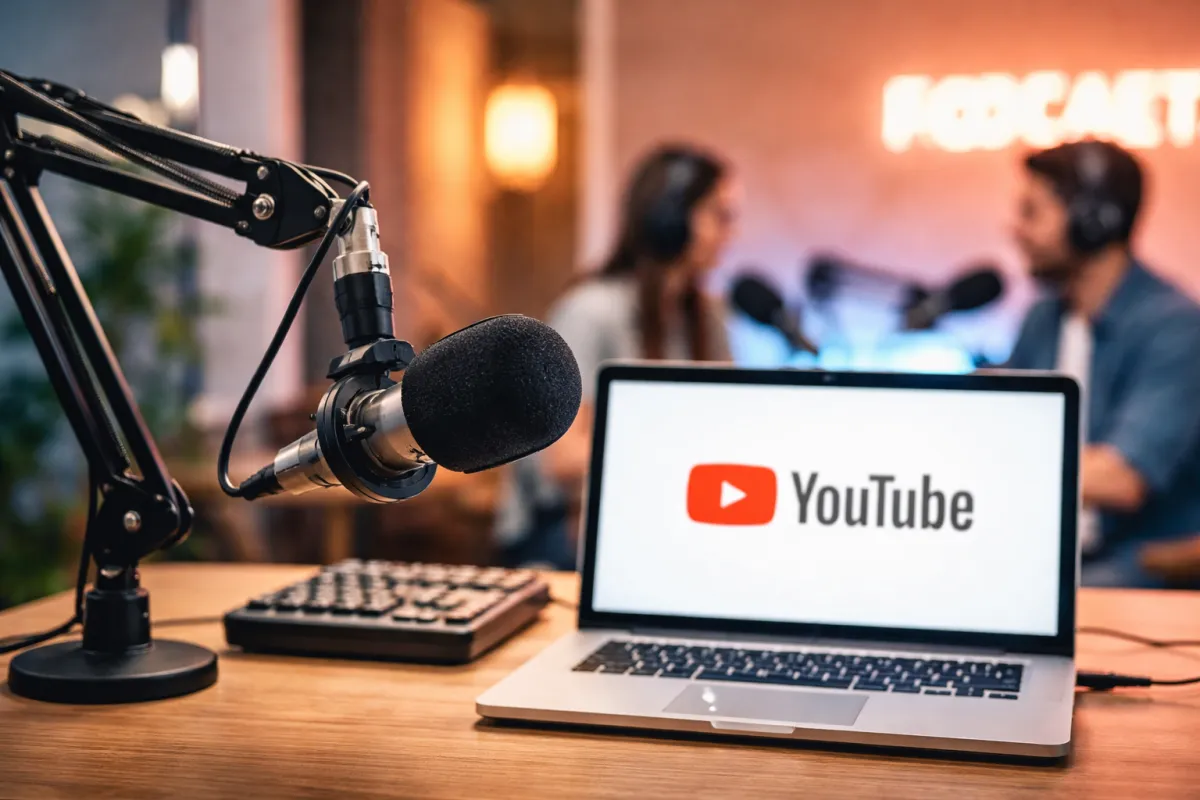
Why Resurreccion Media Recommends YouTube for Podcasting
Podcasting has grown into one of the most powerful content formats for creators, founders, and business owners. It allows long conversations, deeper ideas, and stronger relationships with an audience.
In an ideal situation, a podcast appears everywhere. Apple Podcasts, Spotify, Buzzsprout, and every platform that supports audio distribution all play a role. The wider the distribution, the more places people can listen.
Yet in practice, one platform consistently acts as the engine that drives the entire ecosystem: YouTube.
At Resurreccion Media, YouTube is recommended as the primary publishing engine for podcast content because it builds brand equity, expands discovery, and turns one conversation into multiple forms of content that compound over time.
Proof From Real-World Experience
A pattern appears when businesses launch a podcast without using YouTube as the main engine.
Episodes go live on one or two podcast platforms. Weeks pass. Sometimes months. The question that eventually shows up sounds familiar.
Where are the listeners?
Many creators discover that publishing audio alone does not create attention. Most podcast platforms rely heavily on existing subscribers. Discovery is limited unless outside traffic pushes people there.
Another pattern appears when the same podcast enters YouTube.
One long-form episode becomes more than a single piece of content. Video appears. Clips emerge. Shorts get distributed across other platforms. Over time, those pieces begin circulating across the internet.
The original episode remains online indefinitely. Clips bring new viewers back to it months or even years later.
The difference becomes clear quickly: one format waits for listeners, while the other attracts them.
That difference is the reason many operators treat YouTube as the growth engine for podcasting.
What This Means
A podcast is not only an audio file.
It is a long-form conversation that can be transformed into many different types of content.
YouTube makes that transformation easier than any other platform.
When a podcast appears on YouTube, it becomes:
A long-form video episode
Short clips highlighting key moments
YouTube Shorts for fast discovery
Visual content that builds familiarity with the host
Searchable video content that remains available indefinitely
Audio-only platforms focus on listening. That works well for audiences who already know the show.
YouTube works differently. The platform constantly recommends videos to viewers who have never heard of the podcast before.
This recommendation system changes how podcast growth works.
Instead of waiting for someone to search for the show, YouTube places content in front of people who are already watching similar topics.
That process introduces the podcast to new audiences every day.
Why This Matters for Business Owners
For business owners, creators, and founders, a podcast is rarely just entertainment.
It becomes a platform for authority, brand equity, and long-term audience growth.
The platform used to distribute that podcast affects how far it can travel.
Audio podcast platforms function mainly as libraries. They host episodes and make them available to subscribers.
YouTube functions more like a distribution engine.
Every video uploaded has the potential to be recommended to new viewers.
Every clip can circulate independently.
Every episode can generate additional pieces of content.
This changes the economics of podcasting.
One recorded conversation can become:
A full YouTube episode
Five to ten highlight clips
Multiple short-form videos
Social media posts
Evergreen search content
Over time, the podcast becomes a content engine rather than a single piece of media.
For many creators and businesses, that leverage becomes the difference between slow growth and sustained visibility.
The Case Study That Changed Podcasting
The modern podcast boom traces back to one of the clearest case studies in the space: the Joe Rogan Experience.
Joe Rogan began publishing long-form conversations online, often appearing on YouTube alongside audio podcast platforms.
The format was simple.
Long conversations with interesting people.
Over time, those episodes accumulated millions of views.
Clips circulated widely across the internet.
Audiences grew far beyond traditional podcast listeners.
Eventually, the scale of the show attracted a massive licensing deal with Spotify.
That moment changed how many people saw podcasting.
Suddenly, the format looked less like a niche audio channel and more like a major media platform.
Yet the early growth engine behind that show was YouTube.
The video platform helped conversations travel far beyond traditional podcast directories.
Once that model proved possible, many creators followed the same path.
Step-by-Step Breakdown: Using YouTube as a Podcast Engine
Businesses and creators often approach podcasting with a simple process that turns one episode into a content system.
1. Record the Podcast in Video and Audio
The podcast begins as a conversation.
Recording both video and audio creates flexibility later. Video works on YouTube while audio distributes to traditional podcast platforms.
This dual format allows the same conversation to exist across multiple ecosystems.
2. Publish the Full Episode on YouTube
The full episode becomes the central piece of content.
This long-form video gives viewers the full context of the conversation while providing YouTube with a large piece of content to distribute.
Long-form episodes also build familiarity between host and audience.
3. Extract Key Moments from the Episode
Most podcast conversations contain several strong moments.
These may include:
A clear explanation
A surprising idea
A strong opinion
A memorable story
Each moment can become an independent clip.
These clips often travel further than the full episode.
4. Create Short Clips and Shorts
Short clips introduce the podcast to new audiences.
Short-form content spreads easily across social platforms.
Many creators use the same clips across:
YouTube Shorts
Instagram Reels
TikTok
LinkedIn
X
Each clip points viewers back to the original episode.
5. Let the Content Compound
Over time, the number of clips grows.
Episodes accumulate.
Search visibility increases.
Older episodes continue receiving views long after publication.
This creates a content library that keeps working in the background.
The Strategic Insight Most Podcasters Miss
Many people treat podcast platforms as the starting point.
In reality, podcast directories often function better as distribution endpoints rather than discovery engines.
They are excellent for delivering episodes to existing listeners.
They are less effective at creating brand awareness.
YouTube operates differently.
It rewards consistent content and recommends videos to viewers based on behavior patterns.
This recommendation system turns every podcast episode into a potential discovery event.
A viewer who watches a clip may discover the full episode.
A viewer who watches the full episode may subscribe.
A subscriber may later listen to the show on other podcast platforms.
In this way, YouTube becomes the front door for the podcast ecosystem.
Other podcast platforms remain valuable, but they often function as listening channels rather than growth engines.
Why Clips Change the Game
One long podcast episode might last an hour.
Within that hour, several moments often stand out.
Those moments can live independently as short-form content.
This approach changes the scale of distribution.
Instead of releasing one piece of content per episode, the podcast produces many.
For example:
One full episode
Several short clips
Multiple Shorts
Content for other platforms
Each piece becomes a doorway into the larger conversation.
Clips also introduce the host to audiences who may never search for the podcast itself.
This multiplies the number of potential viewers.
Over time, those viewers begin recognizing the host and the brand behind the podcast.
That recognition is the foundation of brand equity.
Why Brand Equity Matters in Podcasting
Many podcasts focus only on downloads.
Downloads matter, but they tell only part of the story.
A podcast also builds recognition.
When viewers repeatedly see a host explaining ideas, interviewing guests, and sharing insights, familiarity grows.
This familiarity becomes brand equity.
Brand equity creates several advantages:
Trust grows faster
Audiences remember the host
Guests recognize the show
Opportunities appear more often
YouTube accelerates this process because viewers see the host.
Video builds familiarity faster than audio alone.
Facial expressions, tone, and body language create stronger connections.
Over time, the podcast becomes more than a series of episodes.
It becomes a recognizable platform.
Common Mistakes to Avoid
Publishing only on audio platforms
Audio platforms are valuable, but they rarely generate discovery by themselves.
Ignoring video completely
Video multiplies the ways a podcast can appear online.
Without video, many distribution opportunities disappear.
Releasing only the full episode
Clips expand reach dramatically. One episode often contains several moments that deserve their own spotlight.
Expecting instant results
Podcast growth often compounds slowly. Consistency and content libraries create momentum over time.
Treating the podcast as a single piece of content
A podcast conversation often contains dozens of content opportunities when broken into smaller pieces.
FAQ
Is YouTube required for podcasting?
Podcasting can exist without YouTube. Many shows distribute only through audio platforms. However, YouTube often accelerates discovery and brand growth.
Can a podcast succeed with audio platforms alone?
Yes, but growth often relies heavily on existing audiences or outside promotion. YouTube introduces a built-in discovery engine.
Do podcasts need professional studios to succeed on YouTube?
Many podcasts begin with simple setups. Clear audio, good lighting, and consistent publishing tend to matter more than expensive equipment.
Why do podcast clips perform so well online?
Short clips isolate interesting moments. Viewers can quickly understand the idea being shared, which increases the chance of engagement and sharing.
Do successful podcasts still use audio platforms?
Most established podcasts distribute episodes widely. Apple Podcasts, Spotify, and other platforms remain valuable listening channels.
How long does podcast growth usually take?
Podcast audiences often grow slowly at first. As episodes and clips accumulate, discovery tends to increase.
The Bigger Picture
Podcasting continues to evolve as one of the most flexible content formats available to creators and businesses.
One conversation can travel across many platforms.
Audio platforms deliver episodes to loyal listeners.
YouTube introduces those conversations to entirely new audiences.
This difference explains why many creators treat YouTube as the central engine behind their podcast.
The platform allows one episode to become a library of content, a discovery tool, and a long-term asset that continues working long after publication.
For businesses and creators building a brand, that leverage becomes difficult to ignore.
📩 Need Help With Your Specific Situation?
If you want Resurreccion Media to look at your business and give you clarity on your next step, reach out to us.
We help founders, service businesses, companies, and creators build content marketing systems that scale.
📊 Take the Free Growth Scorecard
Get an instant score that shows your bottlenecks and next moves.
You’ll get a free business audit the moment you finish.
It takes less than 5 minutes.
(Click here to get your Scorecard)
▶️ Subscribe to Our YouTube Channel
We post simple, clear videos that help business owners grow without confusion.
You can find us at @resurreccionmedia.


